Notebook: The Handmade Sans Serif Font That Balances Character and Clarity
There's a particular kind of frustration that comes with scrolling through hundreds of fonts, only to find that the ones with personality are impossible to read, and the ones that are legible feel like they belong on a tax form. You want something that feels human—something with warmth and texture—but you also need it to work across a business card, a website header, and a social media post without falling apart. This is the space where the Notebook font lives, and it's a surprisingly useful place to be.
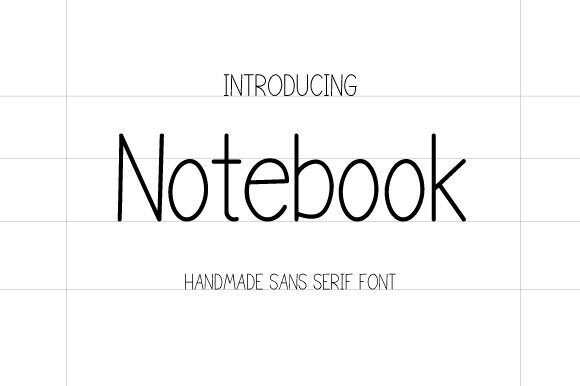
Notebook is a handmade sans serif typeface that carries the organic imperfections of hand-lettering while maintaining the structural clarity of a clean, modern sans serif. It doesn't scream for attention. Instead, it invites readers in with a familiar, approachable tone—the visual equivalent of a friend's handwriting that's somehow neater than your own. The letterforms have subtle irregularities, slight variations in stroke weight, and a gentle warmth that digital fonts often lack. Yet it never sacrifices readability for the sake of charm.
Why Handmade Sans Serif Fonts Are Having a Moment
Design trends cycle, but the pull toward authenticity isn't going anywhere. Consumers are tired of sterile, corporate-looking visuals. They respond to brands that feel real, approachable, and human. This is precisely why handwritten fonts and handcrafted typography have become staples in modern branding—not just for artisan bakeries and boutique shops, but for tech startups, coaching businesses, and even financial advisors who want to soften their image.
The challenge with many handwritten fonts, though, is practicality. A flowing script font might look gorgeous on a wedding invitation, but try using it for body text on a website and you'll lose your audience in a paragraph. A whimsical display font can grab attention on a poster, but it won't survive the demands of a product label with small text. Notebook sidesteps these problems by combining the aesthetic of handcraft with the versatility of a sans serif structure. It's legible at small sizes, distinctive at large ones, and consistent enough to anchor a brand identity without feeling mechanical.
Where Notebook Actually Works: Real Applications for Real Projects
The best way to evaluate a font is to imagine it in context. Here's where Notebook tends to shine:
Branding and Logo Design: If your brand personality leans toward friendly, creative, or approachable, Notebook gives your logo a human touch without looking amateurish. It works particularly well for personal brands, lifestyle businesses, and companies that want to differentiate themselves from the sea of geometric sans serifs dominating their industry. Pair it with a simple serif font for contrast, and you have a brand identity that feels both polished and personable.
Packaging and Product Design: Think about the last time you picked up a product at the store because the label caught your eye. Handmade typography signals care, craft, and attention to detail. Notebook's clean structure means ingredient lists and legal text remain readable, while the handmade quality elevates the overall design. It's a strong choice for food brands, skincare lines, candles, and any product where the packaging needs to communicate quality and authenticity.
Social Media Graphics: Instagram posts, Pinterest pins, Facebook ads—these platforms demand fonts that grab attention in a fraction of a second. Notebook's distinctive character helps quotes, announcements, and promotional graphics stand out in crowded feeds. Because it's legible even at smaller sizes, it also works well for Instagram Stories and Reels overlays where text needs to be read quickly.
Websites and Blogs: For headings and subheadings, Notebook adds personality to a site without overwhelming the content. It pairs well with clean body fonts like a standard sans serif or a light serif, creating visual hierarchy that guides readers through the page. Bloggers and content creators often struggle to find fonts that reflect their voice—Notebook offers a solution that feels personal without being distracting.
Invitations and Event Materials: Whether you're designing a wedding invitation, a workshop flyer, or a conference program, Notebook bridges the gap between formal and casual. It's sophisticated enough for professional events but warm enough for personal celebrations. The handwritten quality suggests that thought and care went into the design, which is exactly the impression you want an invitation to make.
Print Materials and Marketing Assets: Business cards, brochures, postcards, thank-you notes, letterheads—Notebook adapts to a wide range of print applications. For small business owners who handle their own design work, having a font that looks intentional across multiple formats simplifies the entire process. You don't need to hunt for a new typeface every time you create something.
Digital Products and Editorial Design: If you sell ebooks, worksheets, planners, or online course materials, typography directly affects how professional your product feels. Notebook gives digital downloads a polished, branded look that justifies the price tag. It's also effective for editorial layouts—think magazine-style blog posts, lookbooks, and media kits where visual presentation matters as much as the content itself.
Practical Advice for Working With Notebook
Choosing a font is only the first step. Using it well requires some intention.
Consider Font Pairing: Notebook works best when it's not the only voice in the room. Pair it with a simple, neutral sans serif for body text—something like a clean sans serif or a classic serif. The contrast lets Notebook's handmade character shine without competing for attention. Avoid pairing it with other decorative fonts, which creates visual noise and undermines readability.
Test Across Sizes and Formats: Before committing to a font for a brand identity, test it everywhere it will appear. Set it at 12 points for a business card mockup. Try it at 72 points for a social media header. View it on a phone screen and on a printed page. Notebook holds up well across sizes, but you should always verify that the specific weight and style you choose works for your particular use case.
Review the Included Styles: The Notebook font package includes both TTF and OTF files, giving you flexibility depending on your software and workflow. OTF files typically offer more advanced typographic features, while TTF files have broader compatibility. Having both means you can use Notebook across design software, word processors, and even iPad design apps like Procreate without running into format issues.
Think About Licensing: If you're using Notebook for client work, merchandise, or any commercial application, make sure you understand the licensing terms. Most premium fonts include a commercial license, but the specifics vary. Knowing what's covered—print, digital, merchandise, client projects—protects you legally and ensures you can use the font confidently in your business.
Match the Font to the Message: Typography is a communication tool, not just decoration. A handmade sans serif like Notebook communicates warmth, creativity, and approachability. It's an excellent fit for brands and projects that want to feel human. If you're working on something that needs to convey authority, tradition, or technical precision, a different typeface might serve you better. The goal is alignment between what your font says and what your project needs to communicate.
The Bigger Picture: Typography as a Brand Asset
Fonts are easy to overlook. They're not as exciting as color palettes or photography. But typography is one of the most consistent touchpoints in a brand's visual identity. It appears on every piece of communication—every email, every social post, every product label, every invoice. When the typography is inconsistent or poorly chosen, the entire brand feels disjointed. When it's intentional and cohesive, everything looks and feels more professional.
Notebook offers a practical middle ground for anyone who wants their brand to feel both polished and personal. It's not trying to be the loudest font in the room. It's trying to be the most useful one—the typeface you reach for again and again because it works where you need it to work, and it looks like it belongs there.
Whether you're building a brand from scratch, refreshing an existing visual identity, or simply looking for a versatile font that handles everything from Instagram graphics to printed invitations, Notebook deserves a spot in your design toolkit. The combination of handmade warmth and structural clarity is rare, and the practical versatility makes it a font you'll actually use—not just one that sits in your library looking pretty.