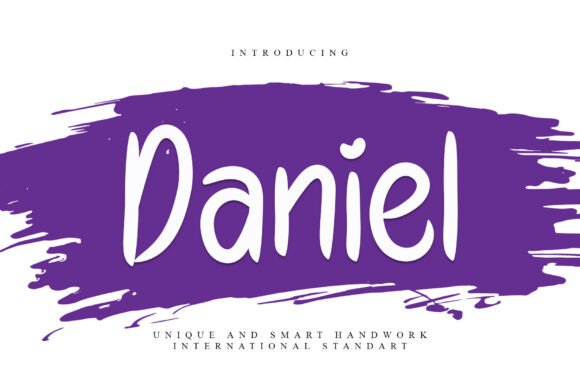
Daniel: The Elegant Font That Brings a Personal Touch to Every Design
There’s a certain magic that happens when a design feels personal—when it looks like it was crafted by human hands rather than assembled by a machine. You see it in the graceful curve of a letter, the subtle variation in stroke weight, and the way the typeface seems to breathe with a life of its own. This is the feeling that the Daniel font seeks to capture. It’s a premium, elegant typeface designed with a professional hand touch, offering a unique blend of sophistication and approachability. Whether you’re a designer working on a client’s brand identity, a small business owner creating packaging, or a crafter designing a heartfelt invitation, this font provides a versatile and visually appealing tool to bring your creative ideas to life.
A Typeface with Personality and Purpose
Daniel isn't just another font; it's a design asset with a distinct personality. Its carefully crafted strokes mimic the fluidity and warmth of handwriting, yet maintain a level of polish and consistency that makes it suitable for professional applications. This duality is its greatest strength. It feels personal and inviting, which is perfect for projects where you want to connect emotionally with your audience, but it also carries the clarity and structure needed for clear communication. As a script font, it excels in headlines and logos where you want to make an immediate, stylish impression. However, its thoughtful design ensures it remains readable, avoiding the overly decorative pitfalls that can make some handwritten fonts difficult to decipher.
The practical applications for a font like this are vast. Imagine using it for the hero text on a wedding invitation website, setting the tone for a romantic and elegant event. Picture it on the label of a boutique candle or artisanal food product, instantly conveying craftsmanship and care. For social media graphics, a touch of Daniel can make a quote or announcement stand out in a crowded feed, adding a layer of authenticity that stock templates often lack. Its utility extends from print materials like posters and business cards to digital products such as e-book covers or online course graphics. The key is understanding how its personality aligns with your project’s goals.
Matching the Font to Your Creative Vision
Choosing the right font style is a critical decision in any design process. It’s about more than just aesthetics; it’s about communication. Daniel, as a display font, is best used for situations where you need to capture attention and convey a specific mood. It’s not typically a body text font for long paragraphs of web copy, but it shines brilliantly in roles where its character can be appreciated. Think of it as the perfect headline font for a blog about interior design, a stylish title for a menu at a café, or the elegant name on a product package. Its strength lies in making a memorable first impression.
A crucial piece of practical advice is to test font pairings. A script or handwritten font like Daniel often pairs beautifully with a clean, neutral sans serif font. For example, using Daniel for a main headline and a simple sans serif like Lato or Open Sans for the body text creates a balanced, professional hierarchy. The contrast ensures readability while allowing the personality of Daniel to shine. Always consider the context. For a formal wedding invitation, the pairing might be with a delicate serif. For a modern startup’s social media graphics, it might be with a geometric sans serif. The goal is to create a harmonious visual system where each typeface has a clear role.
Enhancing Your Brand’s Visual Consistency and Recognition
For small businesses and entrepreneurs, building a strong brand identity is about consistency. Every touchpoint, from your logo to your Instagram stories, should feel connected. Incorporating a distinctive font like Daniel into your brand’s typography toolkit can significantly aid in this. When used consistently across your marketing assets—website headers, email newsletters, promotional flyers—it becomes a recognizable element of your visual language. This repetition helps build brand recognition. Customers begin to associate the elegant, personal feel of the font with your business, whether you’re a boutique florist, a freelance photographer, or a lifestyle blogger.
This consistency directly impacts professional presentation. A thoughtfully chosen typeface elevates the perceived quality of your work. It shows that you’ve paid attention to the details, which can build trust with your audience. For instance, a local bakery using Daniel on its packaging and in-store signage creates a cohesive and charming experience that feels curated and high-quality. This attention to visual consistency is a subtle but powerful form of communication that says, “We care about how we present ourselves to you.”
Practical Considerations for a Smooth Workflow
Before diving into a project, it’s wise to review the included font styles and understand the licensing. Daniel is described as accessible with all glyphs, which means it likely includes a full set of characters, numbers, punctuation, and potentially stylistic alternates or swashes. Exploring these options can unlock even more creative possibilities. You might find alternate ‘a’ or ‘g’ characters that better suit a particular design, or decorative elements that add flair to an invitation.
Equally important is understanding the commercial licensing. If you plan to use the font for client work, merchandise you sell, or any commercial project, you must ensure you have the appropriate license. This is a standard part of using design assets and protects both you as the creator and the original font designer. Taking a moment to read the license agreement is a professional practice that prevents future complications. When testing the font, always check its readability at the size it will be used. A beautiful script can become illegible if set too small on a website button or a printed brochure. Print a test sheet or view it on multiple devices to ensure it performs as expected.
In the end, Daniel offers a valuable tool for anyone looking to inject elegance and a human touch into their work. It’s a creative font that bridges the gap between artistic expression and functional design, proving that beautiful typography is within reach for projects of all kinds. By thoughtfully applying it to your invitations, branding, or digital content, you can create visuals that don’t just look good, but feel genuinely connected to the story you want to tell.