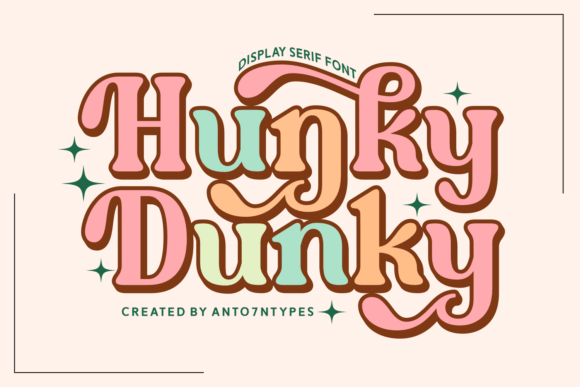
Hunky Dunky: A Font That Brings Retro Joy to Modern Design
There's a certain magic in typefaces that feel like they carry a story—a warmth that pulls you in before you've even read the words. Hunky Dunky is exactly that kind of font. With its bold curves, playful swashes, and a personality that feels like a sun-drenched afternoon, it offers designers and creators a tool that’s both visually striking and deeply inviting. It’s not just another display font; it’s a mood, a vibe, a creative catalyst that blends retro charm with contemporary flair.
Understanding the Visual Personality of This Groovy Typeface
What makes Hunky Dunky stand out in a sea of typefaces? It’s the balance. The letterforms combine clean, structured lines with soft, almost whimsical curves, creating a look that’s bold yet approachable. Inspired by the joyful energy of summer and the heartfelt warmth of celebrations like Father’s Day, every character feels intentional and full of life. The subtle artistic swashes add a layer of sophistication without overwhelming the design, making it a premium font that doesn’t sacrifice readability for style.
This isn’t a font that whispers—it speaks clearly, confidently, and with a genuine flair. Whether you're designing a logo for a boutique brand, crafting a headline for a magazine spread, or creating packaging for a artisanal product, Hunky Dunky brings a distinct visual identity that’s hard to ignore. Its versatility lies in its ability to feel both nostalgic and fresh, making it ideal for projects that need to evoke emotion while maintaining a professional edge.
Practical Applications: Where Hunky Dunky Truly Shines
Let’s talk real-world use. For branding and logo design, this typeface can become the cornerstone of a visual identity. Imagine a coffee shop logo, a children’s book title, or a boutique clothing line—Hunky Dunky delivers character and memorability. Its strong presence ensures your brand stands out on crowded shelves or in busy social media feeds.
For packaging design, the font’s playful yet refined style makes it perfect for product labels, box designs, and hang tags. It communicates quality and creativity, which can significantly influence customer perception and buying decisions. Think of a gourmet jam label, a craft beer bottle, or a specialty candle box—each becomes more engaging with Hunky Dunky’s touch.
In the digital realm, this creative font excels in social media graphics, website headers, and blog titles. It grabs attention in a fast-scrolling environment and helps build a cohesive brand voice across platforms. For marketing assets like posters, flyers, and email banners, its bold weight ensures messages are seen and remembered.
Don’t overlook print materials. Hunky Dunky adds impact to greeting cards, invitations, and editorial layouts. Its smooth, inviting letterforms make it suitable for both headlines and pull quotes, enhancing the overall reading experience. For merchandise like T-shirts, tote bags, and mugs, the font’s distinctive style translates beautifully, creating products people want to wear and use.
Pairing Hunky Dunky with Other Fonts for Harmony and Contrast
One of the keys to effective typography is pairing. Hunky Dunky, as a display font, works best when balanced with simpler typefaces. Consider pairing it with a clean sans serif font for body text—this ensures readability while allowing Hunky Dunky to command attention in headlines. For a more classic or elegant feel, a neutral serif font can provide a sophisticated counterpoint.
When testing font pairings, pay attention to scale, weight, and spacing. Hunky Dunky’s bold personality means it often works best at larger sizes. Use it for titles, logos, or key phrases, and let a more understated typeface handle the smaller text. Always test combinations in context—view them on screen, in print, and at various sizes to ensure they work together seamlessly.
Key Considerations for Using This Font Effectively
Before diving in, consider a few practical tips. First, review the included font styles. Hunky Dunky may come with multiple weights or stylistic alternates—experiment with these to find the perfect fit for your project. Second, think about readability. While it’s highly legible at display sizes, avoid using it for long paragraphs of small text; that’s not its strength.
Licensing is another important factor. If you’re using Hunky Dunky for commercial projects—client work, merchandise, or products for sale—ensure you have the appropriate commercial license. This protects both you and the font designer and allows you to use the typeface confidently across all your creative endeavors.
Finally, align the font with your project goals. Ask yourself: Does this typeface reflect the brand’s personality? Will it resonate with my target audience? Does it support the message I want to convey? Hunky Dunky is ideal for projects that aim to be joyful, creative, and memorable—but it may not suit minimalist or highly formal contexts.
Enhancing Your Creative Toolkit with a Versatile Asset
Adding Hunky Dunky to your design assets is more than just acquiring a new font—it’s about expanding your creative possibilities. Its support for multiple languages makes it a valuable tool for global projects, and its distinctive style helps build strong brand recognition. Whether you’re a designer working on client projects, a small business owner crafting your brand identity, or a content creator looking to elevate your visuals, this typeface offers a blend of personality and practicality that’s rare to find.
In a world where visual communication is paramount, having fonts that tell a story and connect with people is invaluable. Hunky Dunky does exactly that. It’s a tool that doesn’t just display text—it enhances it, giving your words weight, warmth, and a touch of retro joy that can transform any project from ordinary to unforgettable.