Bimolla: The Elegant Serif Font for Modern Luxury Branding
Every designer knows the struggle: you have a brilliant concept for a brand, a packaging layout, or a wedding invitation, but the typography just won't cooperate. You cycle through dozens of options—some feel too stiff, others too playful, and many simply lack the refinement your project demands. That gap between "almost right" and "perfect" is where most design projects stall. Finding a typeface that balances modern minimalism with genuine sophistication can feel like searching for a needle in a haystack.
A Typeface That Speaks Quietly and Says Everything
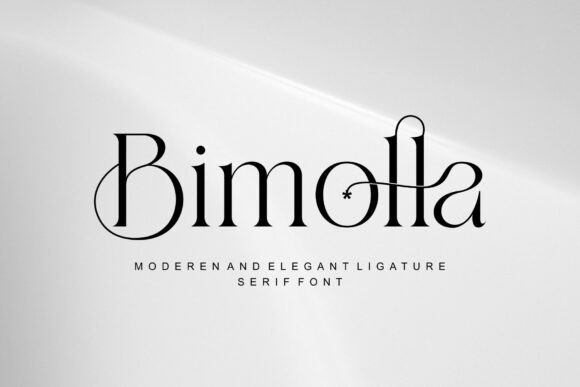
Bimolla enters that space with a distinct presence. It's a serif font, yes, but not the kind that feels dusty or overly traditional. Instead, it carries the DNA of luxury minimalism—smooth curves that flow without excess, letterforms that breathe with generous spacing, and an overall rhythm that feels both contemporary and timeless. The strokes are elegant without being fragile, balanced without being rigid. It's the kind of typeface that lets a brand name sit confidently on a business card, a magazine cover, or a product label without shouting for attention.
What sets Bimolla apart visually is its attention to detail. The graceful alternates give designers options to customize the look of headlines and logotypes, while the delicate ligatures add a layer of craftsmanship that most modern fonts skip entirely. These aren't decorative flourishes for the sake of novelty—they're functional refinements that make text look considered and intentional. When you set a word or phrase in Bimolla, it looks like someone cared about every curve and connection.
Where Bimolla Fits Naturally
Think about the brands you admire—the ones that feel polished without trying too hard. Chances are their visual identity relies on typography that does exactly what Bimolla does: communicate quality through restraint. This makes it an excellent choice for a wide range of creative and commercial applications.
For logo design, Bimolla's clean proportions and refined character shapes create marks that feel premium and memorable. A fashion boutique, a skincare line, a boutique hotel, or a high-end bakery could all build their entire visual identity around this typeface. It works beautifully as a standalone wordmark or paired with a simple sans serif for supporting text.
In editorial design—think fashion magazines, lookbooks, or art catalogs—Bimolla brings elegance to both headlines and pull quotes. Its readability at smaller sizes also makes it a solid option for body text in layouts where a serif adds warmth and personality without sacrificing clarity.
Packaging design is another natural fit. Whether it's a candle label, a wine bottle, or a luxury soap box, the font's balanced strokes and sophisticated alternates help products look shelf-ready and intentional. The difference between packaging that feels generic and packaging that feels curated often comes down to exactly this kind of typographic choice.
And for wedding invitations, event stationery, and personal branding, Bimolla delivers the kind of refined beauty that elevates a piece from "nice" to "memorable." Its ligatures and alternates make names and monograms feel handcrafted, even though the font is clean and digital-ready.
Making Typography Work for Your Brand
Choosing a font isn't just about aesthetics—it's a strategic decision that affects how people perceive your business. The typeface you use across your website, social media graphics, printed materials, and marketing assets becomes part of your brand's voice. Consistency in typography builds recognition. When someone sees your Instagram post, then visits your website, then picks up your business card, the visual language should feel unified. Bimolla makes that consistency achievable because it's versatile enough to work across multiple touchpoints without feeling repetitive.
Readability is another practical consideration that often gets overlooked in the pursuit of style. A font might look stunning in a headline but become illegible at twelve points in a paragraph. Bimolla handles this well—its proportions are generous, its x-height is comfortable, and its letter spacing allows text to breathe. That means you can use it confidently in both display contexts and longer-form content without worrying about your audience squinting or losing interest.
For anyone building a brand identity from scratch, here's a practical approach: start by defining the feeling you want your brand to evoke. If the answer involves words like "refined," "modern," "elegant," or "minimal," Bimolla is worth serious consideration. Set your brand name in it, try a few alternates, and see how it looks alongside your logo, your color palette, and your imagery. Typography should feel like a natural extension of your brand's personality, not an afterthought.
Pairing and Practical Considerations
No font exists in isolation. The most effective typography systems use two or three complementary typefaces—one for headlines, one for body text, and sometimes one for accents. Bimolla, as a refined serif, pairs beautifully with clean sans serif fonts for supporting text. Think of it as the voice of authority and elegance, while a geometric sans serif handles the day-to-day communication. This kind of font pairing creates visual hierarchy and keeps layouts dynamic without feeling chaotic.
Before committing to any typeface for a commercial project, it's worth testing it in context. Set real text—not just "Lorem ipsum"—and see how it handles your actual brand name, your tagline, your product descriptions. Print it out. View it on a phone screen. Look at it next to your photography. These practical tests reveal things that a specimen sheet never will.
Also, take time to review the full character set and any included font styles. Bimolla's alternates and ligatures are part of its value, and knowing how to access them in your design software—whether that's Adobe Illustrator, Figma, Canva, or Affinity Designer—lets you unlock the full potential of the typeface. Many designers invest in a premium font and then only use the default characters, missing out on the very details that make the font special.
Finally, always confirm the licensing terms before using a font in commercial work. Most premium fonts, including Bimolla, come with clear licensing for both personal and commercial use, but the specifics can vary. Understanding whether the license covers web use, print use, app embedding, or merchandise production protects you legally and ensures you're using the asset correctly. It's a small step that saves headaches later.
The Quiet Power of Thoughtful Design
In a landscape saturated with bold, loud, and attention-grabbing visuals, there's something quietly powerful about a design that simply feels right. Bimolla doesn't need to compete for attention—it earns it through craftsmanship, balance, and restraint. For designers, entrepreneurs, and creators who understand that the details matter, it's a typeface that supports the work rather than overpowering it.
Whether you're crafting a brand identity for a new business, designing a magazine layout, packaging a product, or creating social media content that stands apart, the typography you choose shapes how your audience experiences your work. Bimolla offers a refined, modern serif option that bridges the gap between luxury and accessibility—delivering a professional presentation that feels both current and enduring. That's the real value of a well-crafted typeface: it doesn't just look good, it helps everything around it look better too.