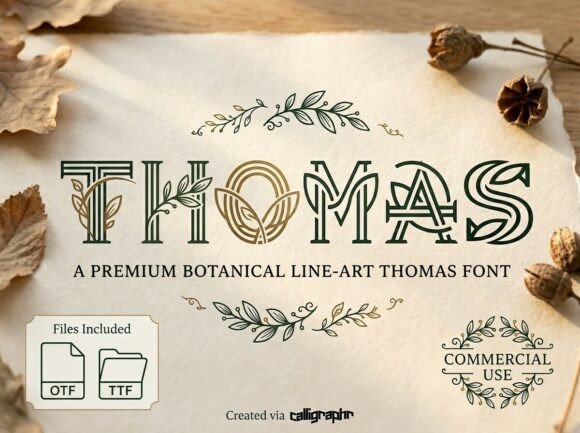
Thomas: Where Botanical Grace Meets Architectural Precision
There’s a particular kind of visual tension that captivates the eye—the meeting point of the natural and the constructed. It’s the feeling of a steel-and-glass skyscraper housing a vertical garden, or a meticulously crafted watch whose gears mimic the spiral of a seashell. This is the territory Thomas, a botanical line-art font, claims as its own. It doesn’t just sit on the page; it communicates a philosophy, offering a sophisticated visual language for brands and creators who value both innovation and the inherent beauty of the organic world.
The Anatomy of an Organic-Modernist Typeface
At first glance, Thomas presents a clean, architectural structure. Its letterforms are built from precise, multi-line strokes that create a sense of depth and dimension without overwhelming the design. This isn’t a simple single-weight font; the parallel lines give each character a built-in sense of rhythm and shadow, lending a tactile, almost engraved quality. What sets it apart, however, is the integration of minimalist foliage. Delicate stems, leaves, and buds emerge from serifs, crossbars, and terminals, blurring the line between typography and illustration.
This careful balance is key to its appeal. The geometric clarity ensures it remains highly legible and authoritative, making it a strong choice for logo design and brand identity work. The fluid, botanical elements inject warmth and approachability, preventing the design from feeling cold or sterile. It’s a font that speaks of transparency—literally, through its open, lined structure, and metaphorically, suggesting a brand that has nothing to hide. For businesses in sustainable luxury, high-end wellness, or contemporary architecture, Thomas provides an instant visual shorthand for their core values.
Practical Applications: From Branding to Daily Content
A font’s true value is measured in its versatility. Thomas shines in contexts where a premium, thoughtful aesthetic is paramount. Consider its use in packaging design for a botanical skincare line. The font itself becomes part of the product story, suggesting that the ingredients inside are as carefully curated as the design on the outside. Its intricate structure also makes it a standout for editorial layouts, such as the masthead of a design magazine or chapter titles in a book on modern living.
Beyond print, its digital applications are equally compelling. As a web design asset, it can elevate a homepage hero section or serve as a striking header for blog posts about architecture, garden design, or minimalist living. For social media, a single word or short phrase set in Thomas can become a recognizable graphic element, boosting brand recognition across platforms. It’s equally at home on wedding stationery, restaurant menus for farm-to-table eateries, or as the defining typeface for a boutique event planning company.
When integrating a complex display font like this into your projects, thoughtful application is crucial. It’s typically best used for headlines, logos, and short, impactful statements. Pair it with a clean, neutral sans serif font for body text to ensure readability isn’t compromised. Testing font pairings is a non-negotiable step; the goal is to create contrast and hierarchy, not competition. Let Thomas command attention in key spots while supporting typefaces handle the heavy lifting of longer paragraphs.
Strategic Considerations for Your Project
Choosing a premium font like Thomas is an investment in your visual identity. Before finalizing your decision, review all the included font styles. Does the family offer different weights or variations that can provide flexibility for different applications within your project? A lighter weight might be perfect for elegant subheadings, while a bolder version could anchor a poster design.
Licensing is another critical, practical detail. Ensure the commercial font license covers all your intended uses, whether for client work, merchandise, or digital products. Understanding these terms upfront prevents legal headaches down the road and respects the work of the type designers who crafted the asset.
Finally, consider the overall mood you wish to evoke. Thomas is a display font with a strong personality. It’s ideal for brands that want to project modern sophistication, quiet confidence, and a connection to nature through design. If your project’s goal is playful, rustic, or overtly traditional, you may need to explore other creative font options. But for those aiming at that specific intersection of the built and the grown, the precise and the fluid, Thomas offers a uniquely powerful tool for visual storytelling.