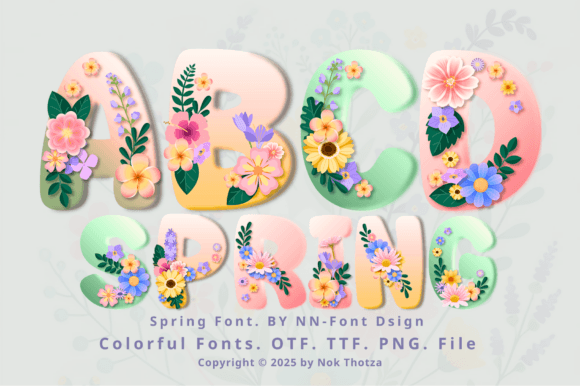
Spring: A Floral Font Bursting with Seasonal Charm
There's a particular kind of energy that arrives with the first warm days of the season—a sense of renewal, color, and possibility. Capturing that feeling in a design project can transform it from merely informative to genuinely evocative. This is where the Spring floral font steps in, offering a direct conduit to that vibrant, blooming aesthetic. It’s not just a collection of letters; it’s a detailed illustration of spring itself, with each character adorned with colorful flowers and lush greenery. For designers, crafters, and entrepreneurs, it presents a unique tool to inject freshness and elegance into a wide array of creative work.
Beyond the Basic: Understanding the Font's Visual DNA
At its core, Spring is a display font, meaning its strength lies in headlines, titles, and short, impactful text rather than long paragraphs. The visual complexity is its defining feature. Imagine the letter 'A' with tiny roses winding up its crossbar, or a 'B' where the bowls are filled with delicate daisies. This intricate detailing makes it a standout creative font for projects where a standard sans serif font or even a script font would feel too plain. It’s a typeface that does double duty, providing legible letterforms while simultaneously acting as a decorative illustration. This duality is key to its practical value—it solves two design needs at once.
Practical Applications: Where This Floral Typeface Truly Blooms
The versatility of a theme-specific font like this is often underestimated. Its applications extend far beyond a single use case, making it a valuable asset in a designer's toolkit. For packaging design, especially for artisanal foods, beauty products, or botanical goods, the font can instantly communicate natural ingredients and artisanal quality. A small business creating handmade soaps or floral teas could use it on labels and boxes to establish a cohesive, charming brand identity.
In the realm of editorial design and publishing, it’s perfect for magazine features on gardening, spring fashion, or wedding planning. The font brings a thematic consistency to the layout that stock imagery alone can’t achieve. For social media graphics, a post using a Spring header will immediately catch the eye in a crowded feed, ideal for announcements about seasonal sales, new product launches, or event invitations. It translates beautifully onto print materials like wedding invitations, greeting cards, and posters for local farmers' markets or garden club events.
Integrating Spring into Your Brand and Marketing Strategy
Choosing a premium font is a branding decision. When used thoughtfully, a typeface like Spring can become a recognizable element of your brand identity. A boutique hotel, a floral subscription service, or a lifestyle blogger could adopt it as a secondary display font for specific campaigns, seasonal promotions, or product lines. This creates visual variety while maintaining a core aesthetic. The key is consistency—using the font for the same types of applications, such as all sale banners or all event headers, helps build recognition without overwhelming your primary typography.
From a marketing perspective, the font enhances audience engagement. A visually appealing graphic is more likely to be stopped on, read, and shared. The detailed, whimsical nature of the Spring font adds a layer of perceived care and creativity to your assets, which can positively influence how your audience perceives your brand's professionalism and attention to detail. It’s a subtle but powerful form of visual communication.
A Designer's Guide to Using This Ornamental Font Effectively
Working with a highly decorative font requires a bit of strategy to ensure it enhances rather than hinders your design. Here’s some practical advice for seamless integration:
- Prioritize Readability: Use it for short bursts of text—headlines, subheadings, pull quotes, or single words. For body copy, always pair it with a clean, highly legible serif font or sans serif font. A good font pairing creates hierarchy and ensures your message is clear. For example, combine Spring with a simple sans-serif like Montserrat or a classic serif like Lora.
- Test File Compatibility: The font package includes OTF, TTF, and PNG formats, offering flexibility. However, as noted, the color version has specific software requirements. If you use Cricut Design Space or similar cutting machine software, you must use the black version. The color OTF/TTF files work in advanced design programs like Adobe Illustrator, Photoshop, Silhouette Studio, and Inkscape. Always check compatibility before starting a project to avoid workflow interruptions.
- Consider the Context: Match the font's personality to your project's goal. Its cheerful, detailed nature is perfect for celebratory, seasonal, or nature-themed designs. It might be less suitable for corporate finance reports or minimalist tech branding. The goal is to ensure the typography reinforces the intended message and mood.
- Leverage the PNGs: The included PNG files are a fantastic resource for quick mockups, presentations, or adding a pre-rendered floral letter as a standalone design element without needing to type and style it. This can save significant time in the conceptual phase.
Final Thoughts: A Seasonal Staple for Creative Projects
The Spring floral font is more than a seasonal novelty; it’s a functional and beautiful design asset for anyone looking to communicate freshness, growth, and elegance. Its value lies in its specificity and quality. By understanding its strengths and best practices for use, you can leverage this typeface to create compelling logo designs, memorable marketing assets, and engaging digital products that resonate with an audience appreciative of thoughtful, detailed design. It’s a reminder that sometimes, the most effective way to connect is to bring the vibrant energy of the natural world right into your typography.